Interested in joining the lab? Email cecilia.padilla-iglesias@uni-tuebingen.de

The GPS Lab

Genotype–Phenotype Evolution in Space

Based at the Human Origins Cluster of Excellence at the University of Tübingen, we study how ecology, demography and culture have shaped the genetic, biological and cultural diversity of humans and other hominins, across space and through time.

Population genetics Computational modelling Archaeology Fieldwork
About the lab

How did humans manage to live in every corner of the planet?

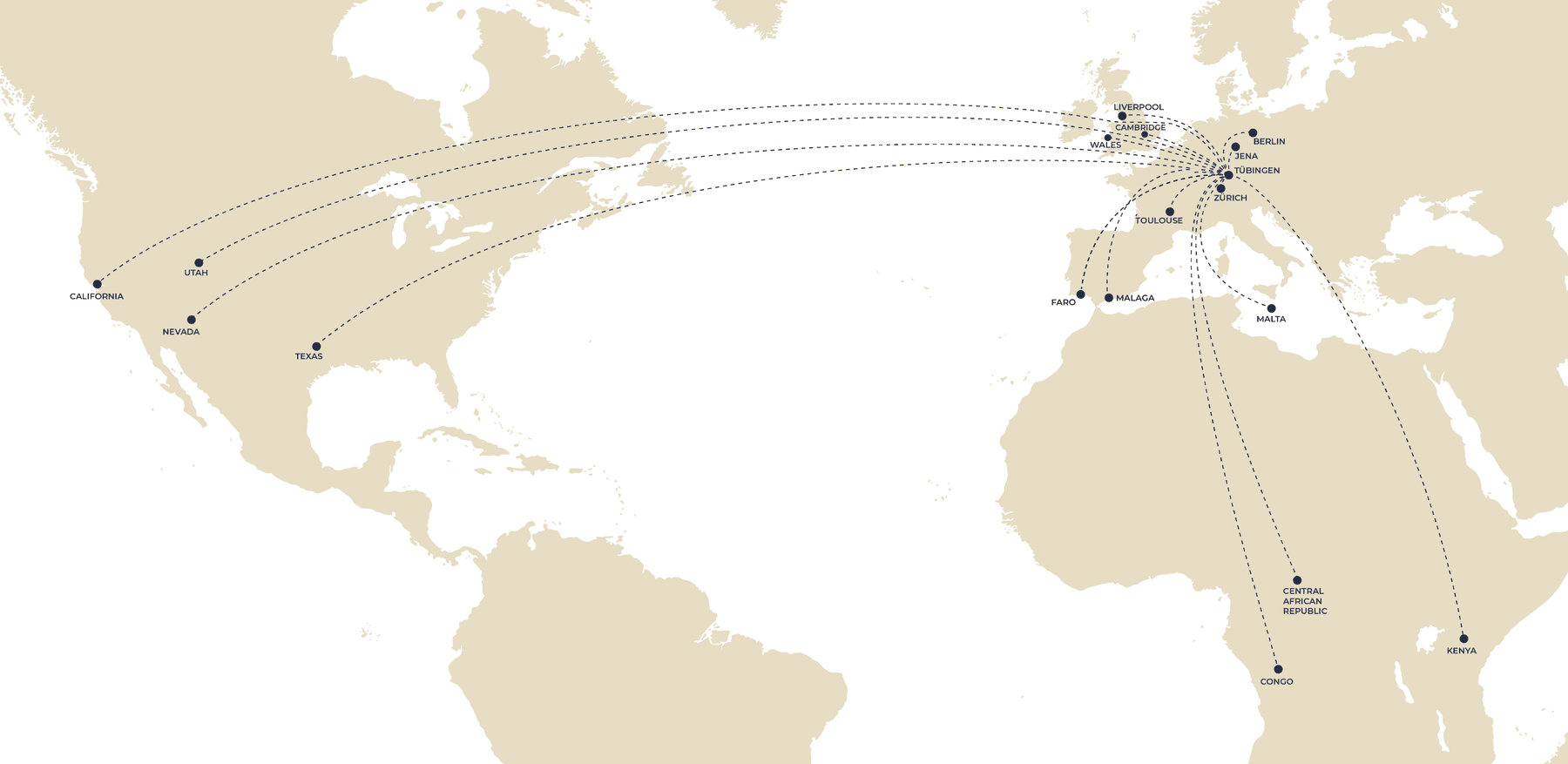
Map showing the lab's links from Tübingen to collaborators and field sites in Europe, the United States and Africa
Where we work: collaborators and field sites connected to the lab in Tübingen.

What we study

We ask broad questions about human origins and evolution, and about the causes and consequences of evolutionary processes more generally. Some of them include:

Ecological drivers of human dispersals and mobility
Causes and consequences of gene flow and genetic isolation
Interactions between Neanderthals and Homo sapiens
Modelling how genotypes map to phenotypes across space and time
Genetic and cultural adaptations to different ecologies
The role of sociality in cultural evolution
Population-specific genetic evolution across human populations
Archaeological approaches to ancient population dynamics

Funding

Bodies that have funded our research include:

  • Forschungskredit Candoc, University of Zurich
  • Leakey Foundation
  • Templeton Foundation
  • Department of Archaeology fund, University of Cambridge
  • Fundación La Caixa
  • Schulz Foundation
  • Wenner Gren Foundation
  • Diverse Intelligence Summer Institute Grants

Come join the GPS Lab

We welcome curious, motivated people interested in MSc theses, PhD projects, postdoctoral fellowships (DFG, Humboldt, MSCA) and internships.